How to Practice Speaking Spanish Alone (7 Techniques That Actually Work)
There is a specific frustration that comes from studying Spanish for months (keeping a streak alive, filling flashcard decks, following along with shows) and still going blank the moment you need to actually say something. If that's you, start here: nothing you did was wasted. Every word you drilled is real, and it's exactly the fuel the techniques below burn. What's missing isn't knowledge. It's a separate, trainable skill: producing Spanish out loud, in real time, with your own mouth.
Here's the part most people don't believe: you can train most of that skill completely alone. This guide covers seven ways to practice speaking Spanish by yourself, roughly in the order they're worth trying. Each one is concrete enough to start today, and six of the seven need nothing but your phone and a kitchen to narrate. They work for practicing any language by yourself. The examples are just tuned for Spanish.
What speaking practice actually trains
Real-time speech asks three things of you at once: retrieving words under time pressure, producing sounds your mouth hasn't automated yet, and tolerating your own mistakes long enough to finish the sentence. Reading and listening train none of these directly, which is why so many learners understand far more Spanish than they can say. Every technique below attacks at least one of the three, and none requires an audience. That matters: fear of being judged is the biggest thing standing between understanding Spanish and speaking it. Here's why you freeze, and what fixes it.
1. Narrate what you're doing
Pick one routine chore (making coffee, washing dishes, folding laundry) and narrate it out loud in Spanish while you do it. Present tense is fine: estoy lavando los platos, el agua está demasiado fría, ahora busco el jabón. It will feel ridiculous for about ninety seconds, and then it will feel like the first speaking practice you've ever done with zero stakes.
Two rules make this work. First, never stop for a missing word: describe around it. Saying la cosa para cortar because you forgot el cuchillo is not a failure; circumlocution is what fluent speakers do, and it's the skill that keeps real conversations alive. Second, keep a running "gap list" on your phone. When you finish, look up only the top three missing words, then narrate the same chore once more. Repetition with the words you just looked up is what turns a lookup into vocabulary you own. Five minutes a day is plenty.
2. Shadow native audio
Shadowing means playing native speech and speaking along with it, about a beat behind, copying the rhythm and intonation as exactly as you can: not translating, just borrowing a native speaker's mouth for a few minutes. It's the fastest solo method for improving how your Spanish sounds.
To start: choose 30–60 seconds of clear audio with a transcript: a slow learner podcast early on, or narrative journalism like Radio Ambulante (free transcripts with every episode) once you're ready for full speed. Then three passes. One: read the transcript while listening. Two: speak in unison with the audio, transcript in hand. Three: shadow just behind the voice, no transcript. For Spanish, listen for vowels that stay pure and short (no English glide on o and e), words linking into a single stream (mis amigos comes out as one word), and where the sentence rises and falls. Expect to sound clumsy the first week. That's the drill working.
3. The two-minute monologue
Set a two-minute timer. Pick one prompt. Talk until the timer goes off: no stopping, no English, no restarting sentences to fix them. Good prompts: what you did yesterday; describe your best friend; argue that your city needs more bike lanes; explain your job to a child. One rule makes it work: the goal is not accuracy, it's not stopping. Flow and accuracy improve on different schedules, and this drill exists to train flow, the muscle that keeps producing language even when the perfect word isn't there.
When the timer ends, write down the three things you couldn't say. That list (not a textbook's chapter order) is your personal curriculum. Look them up, run the same prompt tomorrow, and feel the difference. Two rounds a day costs four minutes.
4. Read aloud, twice
Spanish spelling is nearly phonetic, which makes reading aloud far higher-yield than it is in English: the page tells you almost exactly what your mouth should do. Take one paragraph (a news story, a novel you've already read in English, anything) and read it twice. The first pass is slow and mechanical: clean vowels, the soft d between vowels, a light tap on the single r. The second pass is a performance: natural speed, exaggerated intonation, like you're reading to a room. And steal as you go: any sentence you could imagine saying next week goes in your notes.
5. Record yourself, listen tomorrow
Once or twice a week, record a 60–90 second voice memo. One of your monologue prompts works perfectly. Then: listen to it tomorrow, not today. Today you'll only hear your accent and cringe. Tomorrow, with a day's distance, you'll hear the language: where you actually paused, which sounds drifted toward English, what you said that was genuinely good. Note two things you did well and one thing to fix. Just one.
Every month or so, re-record the same prompt and play it next to the first version. This is the only technique here that lets you hear your own progress, and hearing it is what keeps people practicing when motivation dips. Nobody else ever has to hear a second of it.
6. Move your inner monologue to Spanish
This one has the lowest cost and the longest compounding payoff: no dedicated time, just a reflex. Mentally label things as you see them. Compose your grocery list in Spanish. When you catch yourself thinking something interesting in English, ask: how would I say that? If you can't, that's a gap-list entry, not a defeat.
What this attacks is the translation pipeline. Most freezing mid-sentence isn't missing vocabulary: it's the slow route of thought → English → translation → speech. Thinking in Spanish, even badly, shortens the pipeline until words start arriving already in Spanish. It's the difference between speaking Spanish and simultaneously interpreting yourself.
7. Have real conversations, with an AI tutor
The six techniques above train production, and they'll carry you a long way. But conversation itself adds two things you cannot self-generate: unpredictability (you don't know what's coming next) and repair (someone responds to what you actually said, and you adjust on the fly). Until recently, the only source of those was another human, which is exactly what many solo learners are avoiding, and not out of laziness: performing in front of a person you might disappoint is genuinely hard.
This is the gap AI conversation practice fills: a listener that responds, at 11 p.m., with infinite patience and no judgment. If you try any app in this category, look for three things: it should let you finish your sentences at your own pace, correct you gently instead of grading you, and remember you between sessions so conversations build instead of resetting.
There are good apps in this space. On Duolingo, the free-flowing AI conversation feature (Video Call) is part of Duolingo Max, its premium subscription. Speak and Praktika are dedicated AI-tutor apps and both are well liked: Speak is rated 4.8 stars on the US App Store, with Premium at $17.99/month, and Praktika is also rated 4.8 stars. We've written honest, sourced comparisons: Axo vs. Duolingo, Axo vs. Speak, and Axo vs. Praktika.
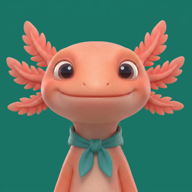
Axo is the app I built for exactly this seventh technique, after years of being the learner in the first paragraph. You talk to an animated axolotl tutor (there are three: Axo, Xolo, and Yara) by tapping to talk and tapping again when you're done. The tutor waits for you to finish; it never interrupts, because turn-taking anxiety is half of speaking anxiety. It replies out loud and corrects with gentle recasts: saying the natural version back to you inside the conversation instead of stopping to red-mark you. It remembers what you tell it, so Tuesday's conversation builds on Monday's. And speech recognition runs on-device using Apple's speech engine: your raw audio never leaves your phone. Only the transcribed text is sent, with your explicit consent. It's live on the App Store now, free to download, with no ads, on iPhone. It's one person's answer to this problem, built in public.
A 15-minute daily plan
Fifteen focused minutes a day; swap freely: the plan you'll actually do beats the optimal one.
| Day | Your 15 minutes |
|---|---|
| Monday | 5 min narrating a chore + 10 min shadowing one clip (three passes) |
| Tuesday | Two 2-minute monologues (same prompt twice) + read one paragraph aloud, twice |
| Wednesday | 10 min shadowing + record a 90-second voice memo (don't listen yet) |
| Thursday | Listen to yesterday's memo, note two wins and one fix + one AI-tutor conversation or monologue |
| Friday | Read aloud + two 2-minute monologues on a new prompt |
| Saturday | Gap-list day: look up the week's missing words, then re-run the prompts they came from |
| Sunday | Rest, or just think in Spanish while you do whatever you were doing anyway |
Questions people actually ask
How often should I practice speaking Spanish?
Daily, even if briefly. Ten focused minutes every day beats an hour on Saturday, because speaking is partly a motor skill: like an instrument, your mouth keeps what it rehearses often and loses what it rehearses rarely. On a day that falls apart, a two-minute monologue while the coffee brews still counts. Consistency is the whole game.
How long should you practice a language a day?
For speaking specifically, 15–30 focused minutes a day is plenty. The limit that matters is focus, not hours. You can layer passive listening on top (podcasts on a commute add real input), but don't count it as speaking practice: your mouth only improves on the minutes it actually moves.
Can you really learn to speak Spanish by yourself, without a partner?
You can build almost all of it alone: pronunciation mechanics, retrieval speed, and the habit of not stopping are all solo-trainable. What a partner adds (unpredictability and responses to what you actually said) you can now get from AI conversation practice. Eventually you'll want real humans; the point of solo practice is to arrive at that first real conversation already warmed up instead of starting cold.
Where can I practice speaking Spanish online?
Three broad options: free language exchanges, where you help someone with English and they help you with Spanish (free, but scheduling-dependent); paid human tutors by the hour; and AI conversation apps you can open at any hour with no appointment. If you're weighing the AI options, we've compared the major ones honestly: Duolingo, Speak, and Praktika.
Why do I freeze when I try to speak Spanish, even though I understand it?
Because understanding and producing are different skills served by different practice: input builds recognition, but speech needs fast retrieval plus automated mouth movements, and most study routines never train those. Add the fear of being judged and you get the classic freeze: everything you know, suddenly out of reach. Both parts are fixable, and we wrote a full page on it: why you freeze when you speak Spanish.
Practice speaking with no one listening
If technique #7 is the one you're missing, that's the one we built: a patient, animated tutor that waits for you to finish, corrects you gently, remembers your progress, and keeps your voice on your phone.
Download Axo free on the App Store
Free to download, for iPhone. Built by one person; email me and I answer personally.